5S workplace organisation: five steps with an example
Use sorting, storage and clear agreements to make one working area easier to use

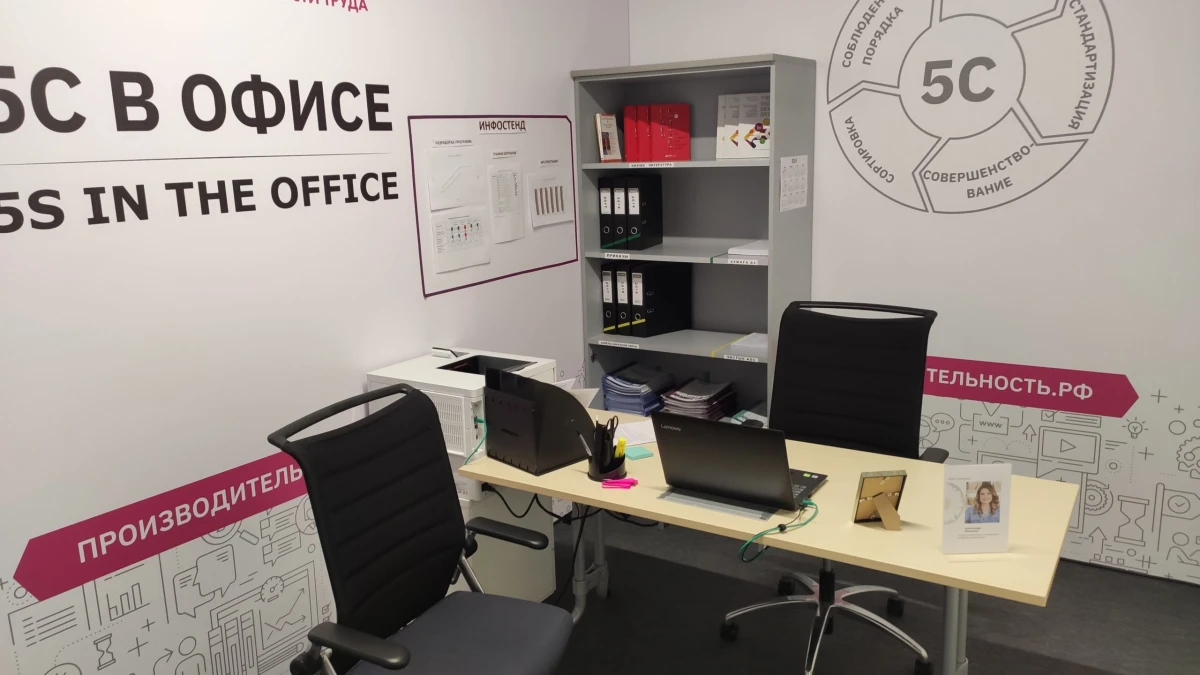
The takeaway
Start with one area and a recurring difficulty. Identify the necessary items, agree on locations and return routines, then check the arrangement during ordinary work.
5S is an approach to organising a workplace: separate what is needed, give it a location, clean the area, agree on a standard and maintain it. Judge the result by a specific task becoming easier to perform. An empty desk alone does not establish that the work process is useful.
Understand the five parts of 5S
The EPA introduction to 5S names five parts: Sort, Set in Order, Shine, Standardize and Sustain. Their Japanese names are Seiri, Seiton, Seiso, Seiketsu and Shitsuke. The last two distinguish the approach from a one-off clean-up.
For an illustrative example, consider a desk used to prepare teaching materials. Workbooks, old printouts, cables and other people’s documents share the surface. The objective is to prepare a session without repeatedly searching for supplies, rather than to remove every visible object.
Set a boundary before starting: this desk and one shelf. Record the current difficulty. Perhaps the current workbook is mixed with completed ones, while an adapter has to be found in a different location each time.
Decide what is needed for the task
Group items by their use: needed here, needed elsewhere or requiring a decision. Infrequent use does not necessarily mean an item is unnecessary. A document can matter even if it is consulted only a few times a year.
Give uncertain items a temporary location with a note stating who can decide and when to review them. Ask the owners of shared tools or other people’s documents before moving them permanently. Sorting is not permission to discard someone else’s property or delete work records.
In this example, the current workbook stays within reach, completed material moves to the shelf and an unidentified cable awaits clarification. The criterion comes from the activity. There is no requirement for every desk to look equally empty.
Make locations understandable to their users
Walk through the ordinary sequence of work. Where does someone collect a workbook, connect a device or leave material for checking? Assign locations that make both finding and returning an item understandable without repeated explanations.
| Difficulty | A possible arrangement |
|---|---|
| Versions are mixed up | A location for the current set and a labelled shelf for completed material |
| A shared adapter goes missing | One labelled compartment known to everyone who uses it |
| A document’s status is unclear | Separate places for material awaiting review and material already checked |
These are options for discussion, not a universal office standard. Check whether the people using the space can reach and recognise the locations. A high shelf or a tiny label can make an otherwise neat system difficult to use.
Describe the condition you want to maintain
Clean the selected area using an appropriate routine. Then describe a few observable signs that it is ready: the current materials are together, the adapter is in its compartment and documents awaiting review are separate.
A usable rule identifies the action, occasion and responsible person. “Keep things tidy” leaves considerable room for interpretation. “Return the shared set to the labelled tray after the session” states something a person can actually do.
Agree on the arrangement with everyone sharing the space. A container label does not replace that conversation, particularly when people perform different activities. Explain legitimate exceptions rather than making people hide work in progress to satisfy an appearance standard.
Check whether the arrangement helps the work
After several ordinary work cycles, examine what changed. You might record searches for the adapter, version mix-ups or requests to clarify a document’s status. Choose one understandable observation instead of creating an elaborate tidiness score.
If the arrangement does not last, examine how it works: an awkward location, an unclear label or too many steps to return an item. A fishbone diagram can help organise competing explanations. Do not assume a lack of discipline without investigating the conditions.
Continue with the practical 5S example for home and a shared workplace. Start with a small area and keep rules whose purpose the people using that area can explain.
How was the article?
One tap helps us understand what you find useful
Discussion
Sign in with an email code to comment and like articles. We’ll bring you straight back here
Sign in to join the conversationComments: 0
It’s quiet here. Be the first to share your experience.
-

Goals, projects, tasks and habits: how to tell them apart
Learn the difference between a goal, project, task and habit, with practical examples and a fifteen-minute planning exercise
-

16 retrospective questions for teams and personal reviews
Choose prompts for useful experiences, difficulties, decisions and the next action
-

How to run a team retrospective that leads to action
Turn observations about completed work into a small change, an owner and a follow-up