How to start meditating: a gentle first practice
Prepare a safe place, choose a comfortable reference point, handle distractions and review your first meditation practice with the option to stop


The takeaway
Choose a safe setting, comfortable support and an accessible reference point. Gently return when distracted, and adapt or stop whenever needed. Afterwards, review comfort rather than an absence of thoughts. Intensifying distress is a reason to stop and seek support when needed.
For a first experience of meditation, choose a short, quiet pause and one understandable reference point for attention. You do not need a special posture, an empty mind or a promise to practise every day.
Prepare suitable conditions
Choose a safe place where you are not driving, monitoring equipment or carrying out another responsibility that needs your attention. Find comfortable support. You can keep your eyes open.
Decide in advance that you can finish whenever you need to. If you want a timer, choose a gentle signal and a short, comfortable duration. A couple of minutes can be an introduction; it is not a treatment dose or a deadline for results.
Try a simple sequence
- Notice the room and whether your position is comfortable
- Choose a comfortable reference point, such as an available sound or the sensation of natural breathing
- When you notice you are thinking about something else, gently return to that reference point
- Adjust your position, change the reference point or stop whenever needed
- At the end, look around and return to ordinary activity at a comfortable pace
You do not need to suppress thoughts or change your breathing rhythm. The NHS beginner's guide treats distraction as an ordinary part of practice rather than failure.
If the reference point is uncomfortable
Attention to breathing or body sensations does not feel comfortable for everyone. You can look at a neutral object, listen to available sounds or finish. Our comparison of meditation formats offers other starting points.
A lack of calm does not mean you should stay longer. Stop if anxiety, distressing memories or a sense of detachment intensifies. Seek qualified support for significant or persistent symptoms.
NCCIH notes that unwanted experiences can occur and advises against replacing conventional healthcare with meditation. Read the safety information.
Review the first attempt
Ask whether you were comfortable enough, what you would change and whether you want to repeat it. “This did not suit me” is useful information too.
Avoid counting thoughts or comparing yourself with a recording whose teacher always sounds calm. Circumstances, experience and needs differ. One short attempt cannot establish how your attention will change over a month.
If you would like to continue
Choose a possible moment and an alternative for a busy day. You might repeat the same format, use a recording with clear instructions or discuss sessions with a teacher. Ask about their preparation and how the practice can be adapted.
If you use a habit tracker, record convenience and conditions rather than a score for how mindful you are. A missed session does not need to be repaid with a double one.
Keep the purpose realistic
The first task is to become familiar with a format and decide whether it fits. Claims about concentration require a different level of evidence; our guide to meditation and attention research explains the distinction.
Other activities can provide an ordinary pause. The everyday wellbeing guide includes options for rest, interests and connection without making meditation compulsory.
How was the article?
One tap helps us understand what you find useful
Discussion
Sign in with an email code to comment and like articles. We’ll bring you straight back here
Sign in to join the conversationComments: 0
It’s quiet here. Be the first to share your experience.
-
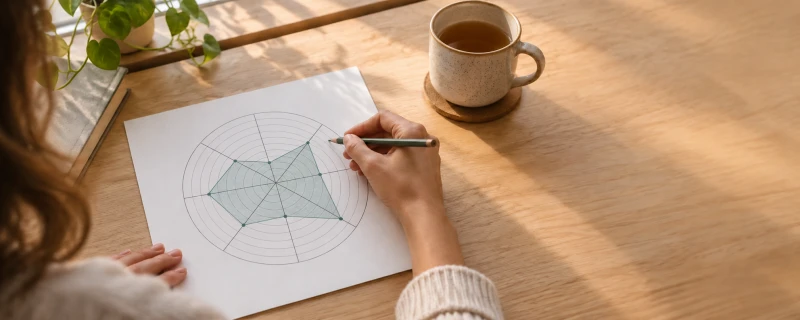
The Wheel of Life: choose what needs attention
Use the Wheel of Life to review your priorities, understand uneven scores and choose one realistic next step, with a worked example
-

Meditation formats: how to choose an option that fits
Compare attention to breathing, sounds, body sensations and everyday experience, with questions about accessibility, teaching and the ability to stop
-

Meditation and attention: what the research shows
What research reviews find about meditation and attention, why programmes differ from short recordings and how to interpret cognitive test results