How to find your why for a specific goal
Explore your reasons, account for commitments and test a small action


The takeaway
Choose one goal and record your interest, desired outcome and outside expectations. Compare the reasons with realistic costs, then test a small action and leave room to revise the goal.
Finding your why for a goal means explaining which outcome you want and why you are willing to give it time and effort. Your answer can include several reasons and change with experience. Start with one real goal, write down your reasons and test them through a small action.
Choose a specific goal to examine
Take a near-term decision instead of trying to settle the meaning of your entire life. For example: “I want to prepare a short presentation for a team meeting.” Say what you intend to do, who it is for and how you will know it worked. If your note only says “public speaking,” identify one possible outcome.
That gives you something to discuss and check. Our guide to goals, projects and tasks can help separate an outcome from the actions needed to produce it. You do not have to choose an activity for the rest of your life.
Record several reasons and what they mean
Complete three sentences: “The activity interests me because…”, “I want the outcome because…” and “I feel expected to…”. Do not search for a correct answer. Income, recognition, a useful skill or connection with other people can be considered directly without dressing them up as a grand mission.
In our example, someone wants to explain the team's ideas more clearly and handle questions with more confidence. They also hope for professional recognition. Those reasons can coexist while pointing to different measures: listeners can help check whether a message is clear, but promotion is not entirely under the speaker's control.
In their 1999 study, Sheldon and Elliot examined goals' consistency with personal interests and values across three longitudinal data sets. That consistency was associated with more sustained effort and goal attainment. A research relationship does not guarantee an outcome from a writing exercise.
Ask follow-up questions while they add information
For each reason, ask “What would this change in daily life?” or “In which situation am I currently missing it?” In the presentation example, “I want to speak better” could become “I want to explain a proposal so colleagues understand the next step.”
ASQ describes the five whys as a tool for investigating a problem's causes, with fewer or more than five questions sometimes needed. That does not make a fifth answer your one true motive. Here, the questions are a way to clarify a goal.
Stop if the answers repeat or turn into judgments such as “Something is wrong with me.” Return to the observable situation and the information you still need. Someone close to you may offer another example, but you decide how much the goal matters to you.
Compare the reason with costs and commitments
Check how the goal fits your life as well as how appealing the outcome seems. Preparing the presentation needs time, materials and agreement about taking part in the meeting. What can you postpone to make room? Which commitments to other people need to be preserved or renegotiated?
Ask “Do I still want this result at a realistic cost?” and “Is there a better-fitting way to get what matters?” If the purpose is to communicate ideas clearly, a brief written proposal could be a suitable first step while the presentation comes later.
Not enjoying every stage does not make the goal somebody else's. Personal value and enjoyment in the process differ; our guide to motivation explains why.
To connect your stated purpose with a project’s conditions and outcome, use the Why, How and What goal worksheet. It also makes room for open questions and a specific next action.
Test your explanation with a small action
Make a working note: “I want to…, because I value…; for a trial I will…; afterwards I will check…”. For example: “I want to explain the team's ideas more clearly. I will prepare a short explanation of one proposal and ask a colleague what next step they understood.”
Agree on the colleague's involvement and the scope of the trial. Then compare expectations with experience: did the task matter to you, what was harder than expected, do you need help and do you want to continue? This tests an action, rather than your identity. Our guide to specific feedback can help you interpret the response.
You can keep the goal, change the approach, reduce the scope or drop an optional direction. If the reason is clear and you want to continue, move on to conditions for regular action. Your why should help you choose a next step instead of becoming an endless requirement to prove your worth.
How was the article?
One tap helps us understand what you find useful
Discussion
Sign in with an email code to comment and like articles. We’ll bring you straight back here
Sign in to join the conversationComments: 0
It’s quiet here. Be the first to share your experience.
-

Why your to-do list grows while your goals stand still
Turn a busy to-do list into progress with a simple audit, one realistic next action and a weekly review
-

Why, How and What: a worksheet for one goal
A conversation-club example for connecting purpose, working conditions and the next action
-
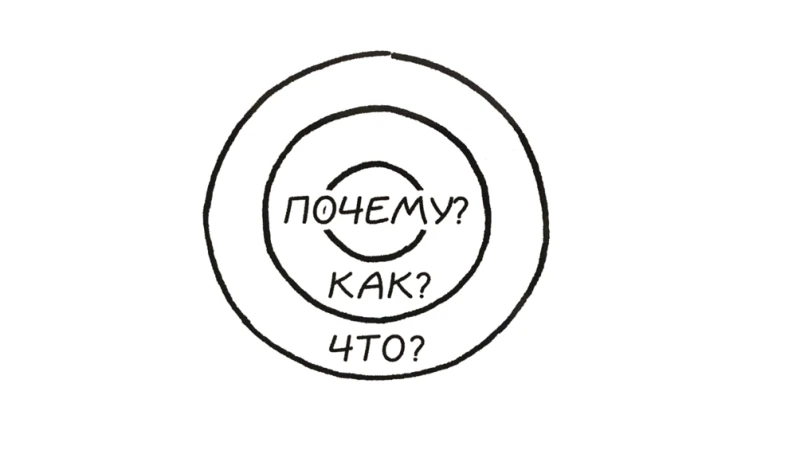
Simon Sinek’s Golden Circle explained with an example
Distinguish purpose, working principles and an offering, then check whether they fit together